







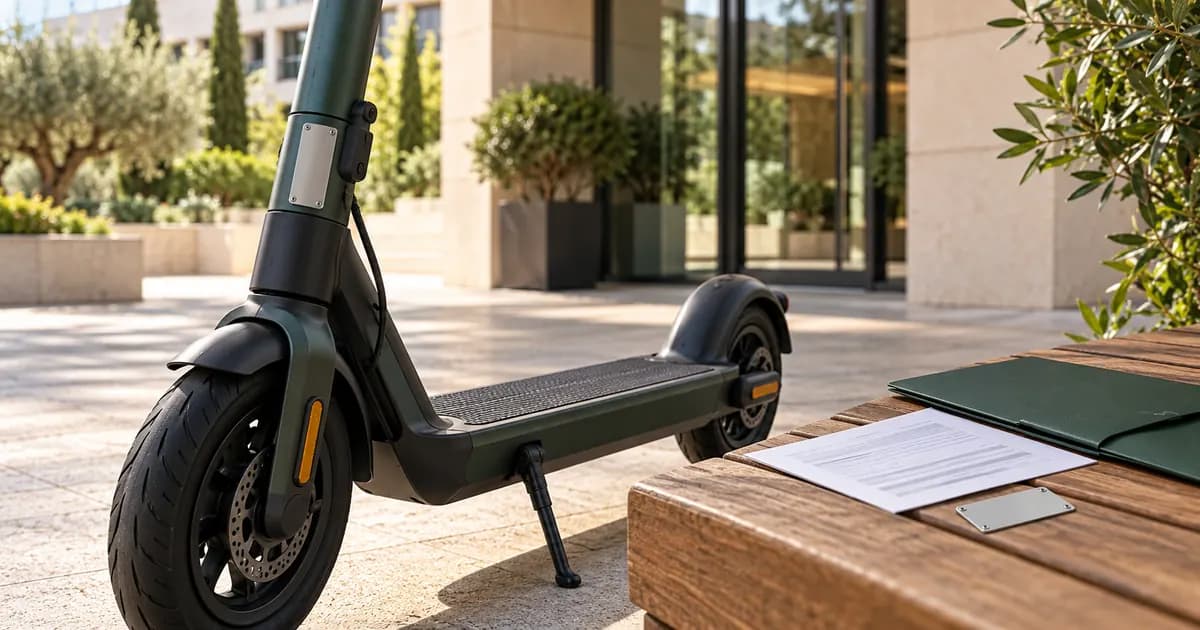
VMP certification, registration certificate and identification label explained
Distinguish VMP model certification, individual registration and the label, including the uncertified transition.
Read moreIdentify the type of VMP, prepare its details and check the official registration channel, identification label and compulsory insurance.
Personal mobility vehicles, known in Spain as VMPs, must be entered in the DGT's Light Personal Vehicle Register. Registration generates an identification number and digital certificate; that number lets you obtain the label the vehicle must carry and arrange compulsory insurance.[1][3][4]
Since 22 January 2024, only certified VMP models may be sold. Uncertified VMPs must also be registered and have compulsory insurance during their transitional period, but their temporary identification ceases to have effect on 22 January 2027 and they may no longer be used on roads from that date.[1][2][3][4]
Synexis currently provides this explanation, rather than a registration channel. Application, identification and insurance must be handled through the applicable official or authorised channels.
The DGT defines a VMP as a vehicle with one or more wheels, designed for one occupant, powered exclusively by electric motors and with a maximum design speed between 6 and 25 km/h.
Owners must register a certified VMP by providing keeper details, the certificate number and the individual vehicle's serial number.[1][3]
The owner of an uncertified VMP still within the transitional period must also register and insure it before using it on roads, identifying it as uncertified in the form.[1][3][4]
A minor can be the registered keeper. For online registration, their legal guardian must apply on their behalf and evidence the relationship where needed.[1][3]
Check the vehicle's physical markings and keep purchase and specification documents before starting through the official channel.
The owner's identification and contact details; if a minor's legal guardian acts, their identification and the necessary evidence of representation too.[1][3]
For a certified VMP, the certificate number, serial number and marking plate or specification sheet details identifying the model, version and individual vehicle.[2][3][4]
For an uncertified VMP, an explicit declaration of that status and accepted evidence such as an invoice, technical sheet or vehicle photograph.[1][3]
This sequence describes the administrative procedure; it is not an operational Synexis journey.
Check current amounts and conditions through official channels before submitting or contracting.
The official DGT page identifies fee 4.1 for VMP registration. When checked on 30 September 2026, it did not show a verifiable amount: confirm the current value at the electronic office before paying.[1]
The policy's price and conditions depend on the insurer and covered risk. Registration does not determine a single premium.
Data validation, label issuance and arranging insurance are separate stages. Confirm timing through each channel and do not assume immediate delivery.
National registration does not replace applicable road-use rules or turn a particular municipal ordinance into a national rule. Also check local use and parking conditions.[4]
Registering a vehicle is not mechanical approval. Certification applies to the model and version under the Manual, while registration identifies the vehicle and keeper.[2][4]
A modification affecting certified characteristics may break conformity with the assessed model or version; check conformity before using a modified vehicle on roads.[2]
Distinguish the model's technical certification and certificate number from registration of each individual vehicle. The digital registration certificate issued after registration lets you obtain the identification label and apply for insurance; it does not replace the model's technical conformity.[1][2]
DGT VMP registration identifies the vehicle in the Light Personal Vehicle Register. Prepare owner, serial number and vehicle details; use the official channel to obtain the registration number and digital certificate. Then buy the identification label from an authorised centre. This Synexis service remains coming soon.[1]
Start by distinguishing the individual vehicle identification from its model documents. Review this guide’s requirements and official channel before registration; the Synexis service remains Coming soon.
Do not confuse the model’s technical certificate with an individual unit’s registration document. Use this guide’s documents section and official sources to identify which you need; registration cannot yet be ordered on this page.
Find out whether you need a duplicate or renewal of the vehicle registration certificate, and which documents, fee and official channel apply.
Check official DGT identification, history, charges and issue information before deciding about a vehicle.
Prepare temporary deregistration when taking a vehicle off the road, with checks for duration, storage and later reactivation.
Coming soon
Content updated: October 27, 2026 (guide and commercial content)
Administrative review: September 6, 2026 — Raúl Moraleda León, CEO · Economist · Licensed administrative manager no. 111 Review of the original administrative guide; it does not cover the new commercial and pricing explanations.
Find the serial number, confirm whether the model is certified and prepare the owner's or legal guardian's identification.